

They may shoot from the hip with their fast-talking, assertive, and even problematic leadership style. We’re talking about the most inspirational fictional characters that real world leaders could learn from. We present the best fictional leaders from the world of film, tv and books in this handy list.
Which fictional leaders can business leaders learn from? Characters such as Aragorn, Captain Kirk, Tony Stark and Sherlock Holmes show how focus, loyalty, adaptability and attention to detail drive success, while Darth Vader, Gordon Gekko and Walter White are cautionary tales about ruling by fear, ignoring ethics and letting ego take over. Our list of 12 pulls out the practical lesson from each.
Fictional Leaders At A Glance
| Character | From | Leadership lesson |
| Aragorn | The Lord of the Rings | Stay focused on the goal and never leave your team behind |
| Darth Vader | Star Wars | Don’t rule by fear or neglect succession planning |
| Gordon Gekko | Wall Street | Know your worth, but don’t cross ethical lines |
| Indiana Jones | Indiana Jones | Take calculated risks and do your homework |
| James Bond | James Bond | Embrace new technology and be ready to improvise |
| James T. Kirk | Star Trek | Lead from the front and know when to let go |
| Jason Bourne | The Bourne Identity | Move towards your goal and practise until it’s automatic |
| Jay Gatsby | The Great Gatsby | Make strong first impressions and set big goals |
| Sherlock Holmes | Sherlock Holmes | Observe closely and try a different approach if one fails |
| Sulley and Mike | Monsters, Inc. | Lead with humility and play to each other’s strengths |
| Tony Stark | Iron Man | Adapt, innovate and treat everyone with respect |
| Walter White | Breaking Bad | Never compromise on quality, but beware ego |
12 Fictional Leaders With Leadership Skills Business Leaders Can Learn From
1. Aragorn Elessar
From: The Lord of the Rings
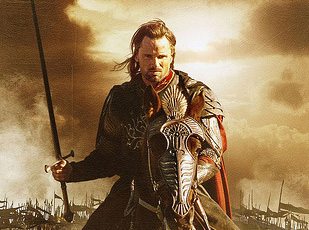
Although Aragorn isn’t tasked with destroying the ring, nor taking it toward destruction, he protects Frodo for as long as he can. Even when separated, Aragorn goes out of his way to create diversions to help Frodo enter Mordor. The point is that in the midst of chaos, and probably a tremendous amount of stress, Aragorn always stays focussed on the task at hand. In that same sense, remember your beginning goal and never be tempted to stray from your beliefs, not even for all the money in the world… or in this case, a ring.
While it’s a battle out there, just remember that no one should get left behind. When Merry and Pippin have been kidnapped by orcs, Aragorn diverts from the original quest to save his team – where they spend a multitude of chapters merely running. Staff members have all most likely given something up to see the business through the recession, so throw them a lifeline and help, albeit merely listening to their problems. If not, you stand a good chance of losing loyal and exceptional talent to competitors.
All in all, Aragorn demands the best from those around him, knows his own limits, likes to get his hands dirty (he’s literally King, but would rather be part of the quest as a ranger) – and puts the good of the whole above his own welfare. With great power comes great responsibility, and Aragorn is the perfect role model of someone who leverages it not only to benefit others, but the future kingdom as well.
2. Darth Vader
From: Star Wars
Although Darth Vader proves that it’s never too late to be redeemed and forgiven, Vader is a prime example of the common mistakes a leader should avoid! Top mistake to avoid: punishment by force choke! The first time we see him use it is when someone expressed an opinion he disagreed with. To sum it all up, Vader rules by fear, and that instilled fear would make his staff work harder just to stay alive. But fear will lower not only morale, but also productivity! You also stand a chance of losing valuable talent who now hate their jobs.
And rather than cultivate innate talent within his own employees, Vader tries again and again to recruit Luke Skywalker. He’s so obsessed with gaining someone from the opposition, that he’s left his company without a successor. No one on the Death Star has been trained to take over! So, what ends up happening? His demise, alongside the Emperor’s, now means the literal collapse of the entire Empire. Encourage talent within your employees, pay attention and pick the people who can keep your business afloat.
Most of all, the Empire regularly fails to learn from their mistakes. They spend millions on the first Death Star, only to have it destroyed by one simple structural flaw (a flaw that, as Rogue One later revealed, was deliberately built in by its own chief engineer – a reminder of what happens when your people stop believing in the mission). They didn’t waste much time building the second Death Star, which they spent a lot more money on and had an even bigger structural flaw! When you’re leading a business, accept your mistakes and learn from them. Go back to the drawing board to figure out a better way to accomplish what you want.
3. Gordon Gekko
From: Wall Street
Most of Gordon Gekko’s quotes have made history on Wall Street. Gekko points out that a fisherman always sees another fisherman from afar. When it comes to business there are many people who have no good intentions at heart. It’s important that we know who those people are and learn how to recognise those that share our same interests.
Another key point he underlines is that when you seek a co-worker’s approval to make business decisions, you will sometimes get turned down. But don’t get discouraged and drop your decision. Follow your own path as often as you can.
His best piece of advice? “What’s worth doing is worth doing for money.” Don’t be one of those businesses that give away free content or hesitate to raise prices just to attract customers. If your product is worth it, people will buy it.
Of course, Gekko’s story ends with him in handcuffs over insider trading, so take the confidence and leave the ethics behind at your peril.
4. Indiana Jones
From: Indiana Jones
Do what Indiana Jones does best be adventurous and take calculated risks. But Jones is also known for being sensible. He only takes risks when he knows there will be a favourable outcome (although, as he admits himself, he often makes it up as he goes along). So, don’t be afraid to reach out, but whether it’s simply introducing a new product or targeting a new market, take the risk potential of business ventures into account.
Make sure to do your homework, Jones certainly does before starting on his newest quest. This lesson is often overlooked. Before you start a business or launch a product, make sure you’ve researched the market and your target audience, or your plan might backfire. After all, adding another similar product to a crowded market is not the road to a successful business venture.
But through Jones’s continuous comic moments, he reminds us to show our human side. Don’t throw in all the corporate jargon when talking to a client, or maybe crack a joke or two all talk doesn’t have to centre around your business.
5. James Bond
From: James Bond
What would James Bond be without his nifty gadgets? Every Bond film has had numerous gadgets to aid Bond in his adventures. From ejector seats to exploding key chains, Bond is never afraid to take advantage of the latest gadgets. At the pace in which technology is moving, this has become a must-do on every business checklist!
Above all else, be ready to improvise! To name an example: In GoldenEye, Bond commandeers a Russian tank to chase a getaway car, driving it straight through the streets of St Petersburg. And you don’t always have to inspire people with motivational speeches to get them to do what you want. Bond often forgets his powers of persuasion and simply charges forward with enough confidence and courage that people will follow his lead.
6. James T. Kirk
From: Star Trek
It is often easy to forget what life is like on the frontline, so make sure to be part of the away team. When you start to lose that perspective, it becomes more difficult to understand what is actually going on. And if you don’t engage with staff, it becomes easy for trust to be lost. Kirk was always part of the away team, and his crew trusted his decisions because he knew the risks of command personally.
Having advisors with different world-views is extremely important. Kirk’s closest advisors were Commander Spock, a Vulcan committed to the philosophy of logic, and Dr. Leonard McCoy, driven by compassion and gut instinct. The two often clashed, recommending different courses of action. But the advice was there, none the less. And it shouldn’t stop there! Bring a range of races, different genders and ages onto your workforce to grasp the full potential of a variety of unique ideas.
But what makes Kirk a brilliant leader, is the ability to know when to let a branch of the company go. In Star Trek III: The Search for Spock, he destroys the Enterprise to save his crew and keep the Genesis technology out of Klingon hands. Sometimes it is important to let go for the bigger benefit. This may include products that are no longer needed or a service that is no longer fit for purpose.
7. Jason Bourne
From: The Bourne Identity
Entrepreneurs often find themselves spending too much time looking for the perfect idea instead of trying to get the product or service out there. Although it’s good to think before implementing, you can sometimes stray from the initial focus, or lose the plot completely. Whatever the size of the challenge, Jason Bourne never hesitates to move forwards, but always makes sure his progress is towards achieving his initial goal. Bourne constantly made sure to execute – in more ways than one.
Whether in completing tasks or in combat, Bourne’s reflexes have a habit of getting him out of trouble. But this automated response all comes down to training and practice. It might not seem glamorous, but by ritualising the more mundane tasks to the extent of making it an auto-pilot job, you will have more power available for bigger challenges.
8. Jay Gatsby
From: The Great Gatsby
Jay Gatsby plays the role of entrepreneur to perfection – there’s a reason why he’s called the “great” Gatsby. Gatsby believes in the first impression, and his image-building works almost like marketing: he dresses well and, as a master of networking, makes sure to leave a lasting impression not just on Daisy, but on society and the rest of his circle. He also shows how a clear personal brand can help you rise from humble beginnings when you’re motivated by a specific goal.
Forming a successful career for himself from humble beginnings, Gatsby shows that no ambition is too great. This comes hand-in-hand with the ability to focus. Although he focuses on his business, he is also trying to win Daisy’s heart, and his knowledge of her preferences shapes how he presents himself. By continuously believing his focus will gain the end result, he is driven to success. This also highlights the importance of setting goals. Gatsby may be shaped by the events of his life, but he still reflects how ambition and positioning can influence outcomes. Bear in mind, though, that Gatsby’s fortune comes from bootlegging and the story is ultimately a cautionary tale: build your success on solid foundations. Effective communication and focused efforts matter, but image alone does not build trust or make someone a good leader. As a character from the golden age, Gatsby can still teach modern business leaders about audience awareness and positioning.
9. Sherlock Holmes
From: Sherlock Holmes
Sherlock Holmes’ success, as he would surely like to remind us, rests solely on his innate talents. It is a congregation of qualities, amongst which includes the power of deduction – despite his visible vices – that make him so successful. The biggest lesson that can be learnt? There is more than one way to approach a problem, whether that is by going out in disguise or knowing the right questions to ask. If one approach fails, he merely comes up with another idea, no matter how silly it may seem.
This links to the importance of detail! Don’t let anything get past you! The minute a person walks into the room, Holmes can tell where they’ve been and even what they had for dinner. It requires a lot of patience, but always observe your clients and partners.
Although Holmes actively pursues cases, people often come to him from near and far to have their problems solved. No matter how hard he might be to work with, his reputation precedes him – everyone knows that he’s the right man for the job. In much that sense, your brand showcases who you are, and the right customer service and business goal will work miracles for your reputation.
10. Sulley and Mike
From: Monsters, Inc.
From failing university and starting off in the mail room, Sulley and Mike quickly become the top scare team in the factory. The potential was there, and although university didn’t necessarily awaken any innate talent in them, the corporate culture in which they found themselves in were keen to give chances to those that showed possible skill. Leadership doesn’t always come from the top; those at the bottom that make their way up, often have a better understanding of the business. And when Sulley finally takes that top spot, he doesn’t hide in his office. So, a humble leader is an effective leader.
Team work is essential, and it’s even better if you get along. Mike and Sulley work together as a unit, and even though Sulley might be seen to be the star of the team, Mike is the strategist. Play off of each other’s strengths and weaknesses.
11. Tony Stark
From: Iron Man
The true mark of any tech leader is the ability to adapt. What one can truly learn from Tony Stark is that there should always be a plan A, B, C, or even D, in order to make sure you evolve accordingly. When your business becomes outdated, or even ineffective, embrace the change and look for ways that would address the situation. Take Stark for example, he shut down his company’s weapons division for a new direction in business. Iron Man spends a life-time improving his armour and coming up with better ways to make the suit work. In more than one case, the new upgrade saved his life – or even the world. Even in moments of crisis, never stop innovating.
So, of course, never give up! You certainly can’t stop Iron Man. Surely enough, people caught on and started copying his designs. This meant the relentless pursuit of trying to stay ahead of the game – innovation, innovation, innovation! Not everything will work out, but you’ll stumble upon something that will make you truly distinctive in your marketplace. By Iron Man 3 he was already on suit number 42, and by Avengers: Endgame he had reached Mark 85.
Most of all, learn to recognise and nurture opportunities. This is best seen in Iron Man 3, when Aldrich Killian, the villain operating behind the “Mandarin” persona, almost beats Iron Man to a pulp. Years earlier, Killian had approached Stark with a project called Advanced Idea Mechanics (AIM) and was brushed off. After being shunned by Stark, Killian built AIM into a powerful business for himself, always visualising a target on Stark’s back. Back in the day, when Yahoo! was reigning champion of the search engine kingdom, Sergey Brin and Larry Page reportedly tried to sell their algorithms for around $1m (reports vary on which search company they approached, with Excite most often named). They were turned down, and long story short, look at Google now! You never know what alliance or partnership will become valuable, so treat everyone with respect and think about future impacts.
12. Walter White
From: Breaking Bad
Walter White is possibly TV’s most infamous entrepreneur. White’s success is largely attributable to his superior product – blue meth, which is 99.1 per cent pure. But apart from always refusing to compromise the quality of the meth, what makes his product so superior? He’s good at what he does. Although a brilliant scientist, White works below his potential as a high-school chemistry teacher. Only when he’s diagnosed with terminal lung cancer, does he go back to the science he’s so good at – even if it’s out of desperation to make quick money to provide for his family after his death. It works: he takes the simple operation of cooking meth and turns it into an international powerhouse. Find something you’re truly great at and stick with it.
White is quite a brilliant tactician. And although he’s committed several murders, as a strategist, White has often proceeded by the book. After Walt and his partners steal 1,000 gallons of methylamine, Mike makes a deal to sell his and Jesse’s share to Declan, a rival dealer. Declan, however, demands Walt’s share as well so he can get the famous blue meth product off the market entirely. Walt’s counter is to make a deal of his own, so that Declan now distributes Walt’s meth. Through this strategy, Walt creates a new role within the industry as a pure manufacturer with no involvement in the street market. Of course, his pride and secrecy ultimately cost him his family and his life, so treat him as a masterclass in product quality and a warning about ego.
More Fictional Leaders Worth Learning From
If you want a few more modern role models, these fictional leaders are worth adding to your list:
- Leslie Knope (Parks and Recreation) – The deputy director of Pawnee’s parks department shows how relentless optimism, genuine care for the team, and effective communication can turn an unglamorous workplace into a high-performing one. Celebrate people’s strengths and back them publicly.
- Jed Bartlet (The West Wing) – The fictional US president surrounds himself with the smartest people he can find and trusts them to challenge him. Hire people who are better than you in their field, then listen to them.
- Ted Lasso (Ted Lasso) – The American football coach hired to manage an English football club leads with kindness, curiosity and trust. He shows that results can follow from putting people first and that honesty can build trust when a team is under pressure.
- Jean-Luc Picard (Star Trek: The Next Generation) – The captain listens to his whole crew before deciding, prefers diplomacy to force and stands on principle when it counts.
- Captain Raymond Holt (Brooklyn Nine-Nine) – A respected leader in Brooklyn Nine-Nine, Holt shows how strong leadership skills can include structure, calm judgment, and the ability to develop people by personalizing his coaching approach for each team member.
- Christina Yang (Grey’s Anatomy) – Christina Yang leads by example, and her passion, ambition, and exacting standards push the people around her to raise their game.
- Minerva McGonagall (Harry Potter) – McGonagall shows how to guide people with clear standards, offering constructive criticism in Harry Potter while balancing it with positive feedback.
Fictional Bosses Who Show What Not To Do
Sometimes the best leadership lessons come from the leaders you don’t want to be:
- Miranda Priestly (The Devil Wears Prada) – The editor-in-chief of Runway has an exacting eye and sky-high standards, but her demanding style leaves little room for support. High standards without care wear people out.
- Michael Scott (The Office) – The regional manager of Dunder Mifflin’s Scranton branch wants to be liked more than he wants to lead, so he avoids hard conversations. Being approachable is good, but you still have to make the tough calls.
- Logan Roy (Succession) – The founder of Waystar Royco keeps his family and executives competing and never plans for who comes next. Like Vader, he shows the cost of having no succession plan.
- Michael Corleone (The Godfather) – Michael Corleone transitions from outsider to authoritarian patriarch, showing how a leader can lose perspective when power becomes the priority. His story is a reminder that leadership built around fear and loyalty tests carries a heavy personal cost.
- Tywin Lannister (A Song of Ice and Fire / Game of Thrones) – Tywin Lannister operates on the belief that legacy outweighs morality, and that mindset shapes every brutal decision he makes. He gets short-term obedience, but it leaves behind resentment, trauma, and a fragile family order.
- Leto Atreides II (Dune) – Leto Atreides II imposes a long period of control on humanity, turning stewardship into something far more absolute. He shows how even visionary leadership can become dangerous when it stops trusting people to grow without force.
Why Do Fictional Leaders Make Good Leadership Case Studies?
Stories compress years of decisions into a few hours, and their mistakes are safe to study. Fictional leaders are easy to remember, so they are useful for sparking discussion in team training or for reflecting on your own leadership style. Just remember that they are exaggerated for drama, so treat them as prompts for thinking rather than blueprints.
FAQ: Fictional Leaders
Who are the best fictional leaders for business owners to learn from?
Popular choices include Aragorn for loyalty and focus, Captain Kirk for leading from the front, Tony Stark for adaptability and innovation, Sherlock Holmes for attention to detail, and Leslie Knope for building a positive team culture. Captain America is also often named among the most respected fictional leaders because his leadership skills help him earn the trust of powerful allies like Iron Man, and his ability to lead and win in battle is part of why many rate him so highly among great leaders. Optimus Prime belongs in the same conversation because he has led for millions of years, commands an army as a military leader, and serves as a father figure to the Autobots.
What leadership skills can leaders learn from fictional characters?
Fictional characters show leadership qualities and mistakes in action, such as staying focused on a goal, putting the team first, taking calculated risks, adapting to change and learning from failure. Characters such as Captain America also show leadership skills through effective communication and by leading major teams like the Avengers and, in some comparisons, the Justice League, which is why many people see him as a good leader and one of fiction’s great leaders. Optimus Prime leads by example and admits his mistakes rather than trying to control every situation. Their stories make these lessons memorable.
Who are examples of bad fictional leaders?
Darth Vader rules by fear and has no successor, Michael Scott avoids hard decisions, Miranda Priestly demands perfection without support, and Logan Roy pits his family against each other. They are all useful examples of what to avoid.
Is Walter White a good role model for business owners?
Only in part. He shows the value of an exceptional product and sharp strategy, but his story is also a warning about ego, secrecy and ethics. He is better treated as a cautionary tale than a role model.
Did we miss anyone? Let us know which fictional leader inspires you the most.
Click here for more great leadership quotes to inspire you.


